Arabic perfume samples: where to start
Arabic perfume covers far more than oud. Seven samples from different houses and styles, and a calm way to find out which direction suits you.

Arabic perfume samples are the easiest way to learn what the range holds, because the range is wide and the names tell you very little. Houses from the Gulf make fresh citrus perfumes, sweet caramel ones, dry incense ones and dark oud ones, sometimes under one roof. This guide picks seven samples that sit far apart on purpose, so that a few days of wearing them show you which direction is yours.
What the Arabic range covers
The Arabic perfume samples collection is the longest list on DecantGems, with houses such as Bujairami, Rayhaan, Lattafa, Rasasi and Arabiyat Prestige. Ingredients that people link with the tradition, such as oud, amber, rose, saffron and incense, do appear a lot. They share the shelf with modern styles built around citrus, mint, tea and musk. We sort each house into one range for browsing, which is a practical choice and no verdict on origin or quality; niche, designer or Arabic explains the thinking.
Seven samples, seven directions
We chose these for contrast and because a full note list is on record for each. The order runs from light to dark.
Bujairami Hectic is the bright end. It opens with citron, Calabrian bergamot and Sicilian orange, moves through Nigerian ginger, Ceylon cinnamon and Tunisian neroli, and rests on ambroxan, guaiac wood, olibanum and Chinese black tea. Citrus with ginger and tea is a good test of whether you like Arabic perfume when it is dry and clean.

Rasasi Hawas Ice is the aquatic option. The recorded top is apple, Italian lemon, Sicilian bergamot and star anise, the heart plum, orange blossom and cardamom, and the base musk, amber, driftwood and moss. Our records file it under summer.

Maison Asrar Majesty sits in the middle, floral and musky. Its top is grapefruit, ginger and bergamot, the heart jasmine, rose and orris (iris root), and the base musk, ambergris, vetiver, patchouli, tonka and sandalwood.

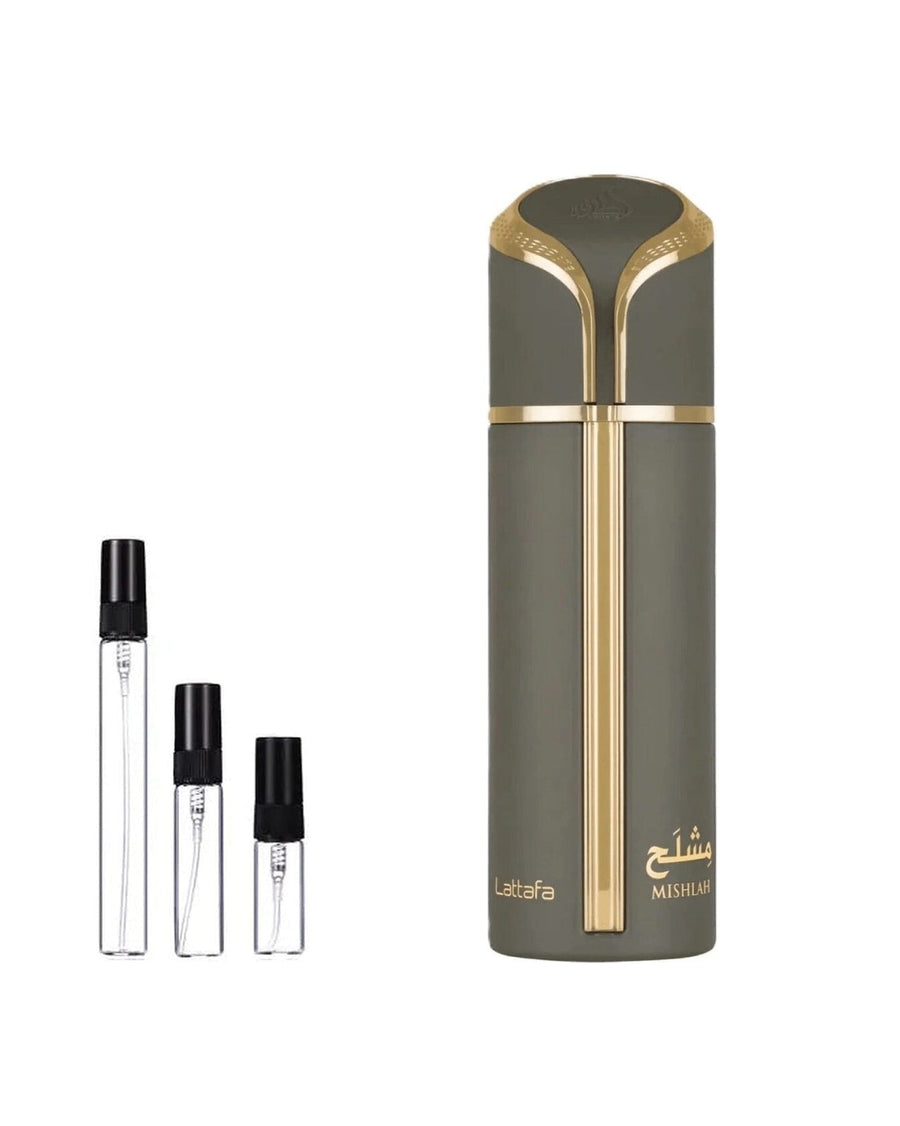
Lattafa Mishlah brings the dry, resinous side: bergamot and lavender on top, spices, incense and cedar in the heart, amber, musk and powdery notes underneath. It is a gentle way into incense.
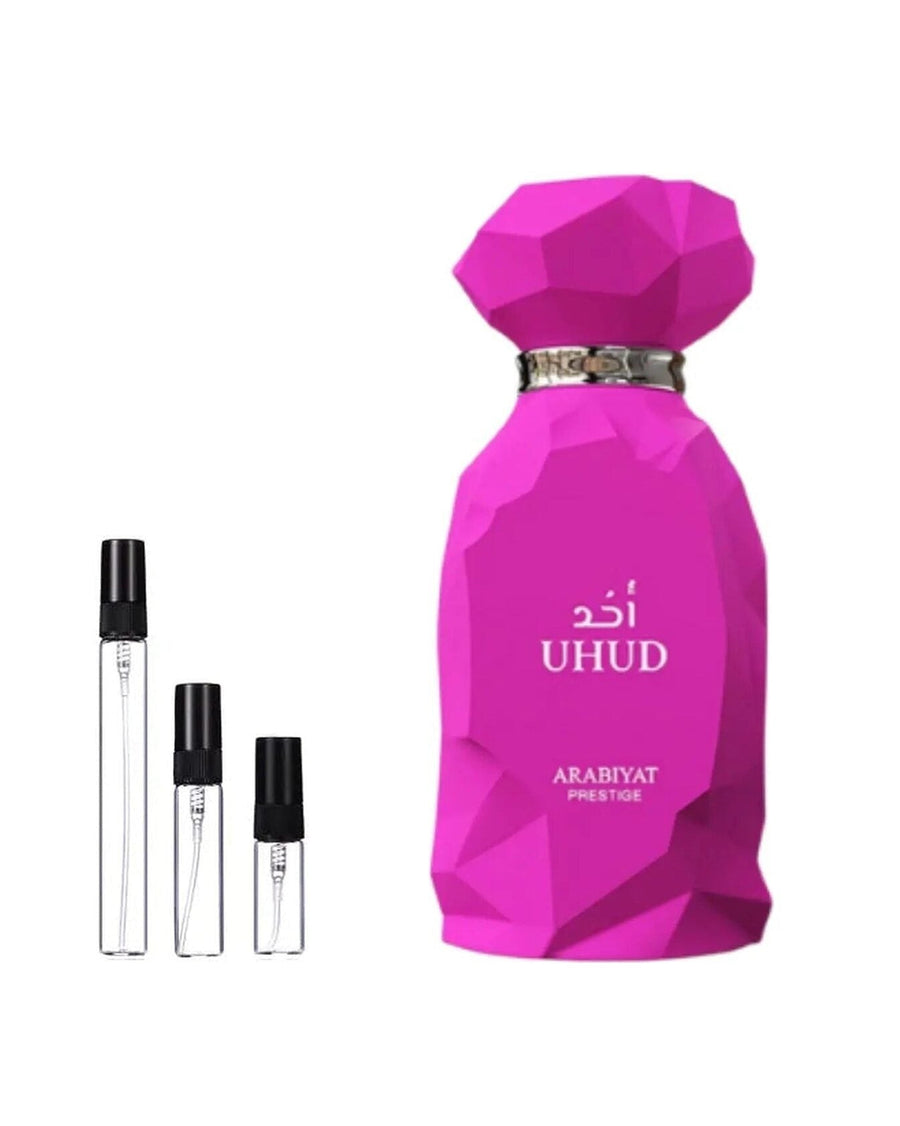
Arabiyat Prestige Uhud is the sweet one. It starts with caramel, red fruit and rose, continues with honey, raspberry and tonka bean, and finishes with vanilla, white musk and amber. Wear it on a cool day, as it is tagged for autumn and winter.
Arabiyat Prestige Ramad Oriental goes toward spice. Cardamom and elemi open a list of cardamom, elemi, pepper, lemon and bergamot, the heart holds saffron, cumin, patchouli, geranium and jasmine, and the base opoponax, olibanum, benzoin, vanilla and amber.

Arabiyat Prestige Mahd Al Dhahab is the darkest of the seven, with oud in its heart: bergamot, lemon and spices first, then amber, patchouli and agarwood (oud), and vanilla, sandalwood and white musk to close.

How to read your results
Wear one sample per day on clean skin, and write down a single line each evening. After seven days you will have a pattern: perhaps you reached for the citrus every time, or the sweet one turned out to be too much by midday. That pattern is more useful than any description, and it tells you which house guide to open next: Bujairami, Rasasi or Lattafa. If oud caught your attention, oud samples to try first goes deeper, and how to test perfume on skin gives the routine.
Intensity matters with this range. Several of the darker perfumes are tagged strong in our records, so one spray is a fair start. Our glossary explains Extrait de Parfum and the other terms you will meet.
Next steps
All houses are listed on the brands page, and the scent finder narrows things down if you know what you like. To combine several vials, see sample sets. Every vial is filled and labelled by FragranceGems from the original bottle, and we are not affiliated with the houses; how we fill your sample explains it, and the FAQ covers the rest.
FAQ
Is every Arabic perfume heavy and sweet?
No. The range includes citrus, aquatic and aromatic perfumes next to the amber, oud and caramel ones. Our records tag each sample with a scent family and an intensity, so you can pick the gentle ones first.
Which Arabic house should I start with?
Start with the style, not the house. Pick one fresh, one sweet and one woody or oud sample from different houses, wear them on separate days and note which you reach for. Then read that house guide.
Do I need to like oud to enjoy Arabic perfume?
No. Many Arabic perfumes contain no oud at all, and the ones that do often surround it with fruit, honey or incense. A sample shows you whether the oud in a specific perfume works for you.