Blind buying perfume: why samples save money
Buying a perfume without smelling it is a gamble with a full bottle. Why a note list is not enough, what a sample shows, and how to use one.

Blind buying perfume means paying for a full bottle of something you have never smelled on your own skin. People do it all the time, on the strength of a note list, a review or a friend's recommendation, and some are happy with the result. Many are not, and a bottle that sits unused is the most costly way to find out. This article explains why a note list is not enough and what a sample shows that a list cannot. We give no figures, because they depend on what you buy; the argument is about risk.
What a note list cannot tell you
A list tells you which notes are present. It does not tell you how strong each is, how long it lasts on you, or what your skin does with it. Take Pernoire Oudian: its list opens with durian, saffron, tropical fruits and szechuan pepper, continues with cistus labdanum and olibanum, and ends on oud, leather and vetiver. Durian and tropical fruit with oud is not a combination you can imagine from words.

Take Penhaligon's Endymion, a cologne tagged light, whose single list is bergamot, lavandin, suede, coffee accord, geranium and cedarwood. Coffee and suede in a cologne is a surprise that a reader would not expect from the category.

Zoologist Squid opens with pink pepper, solar salicylate and incense, goes through black ink accord, salty accord and opoponax, and rests on ambergris, benzoin and musk. Incense and salt together are hard to picture, and a written description cannot do it justice.
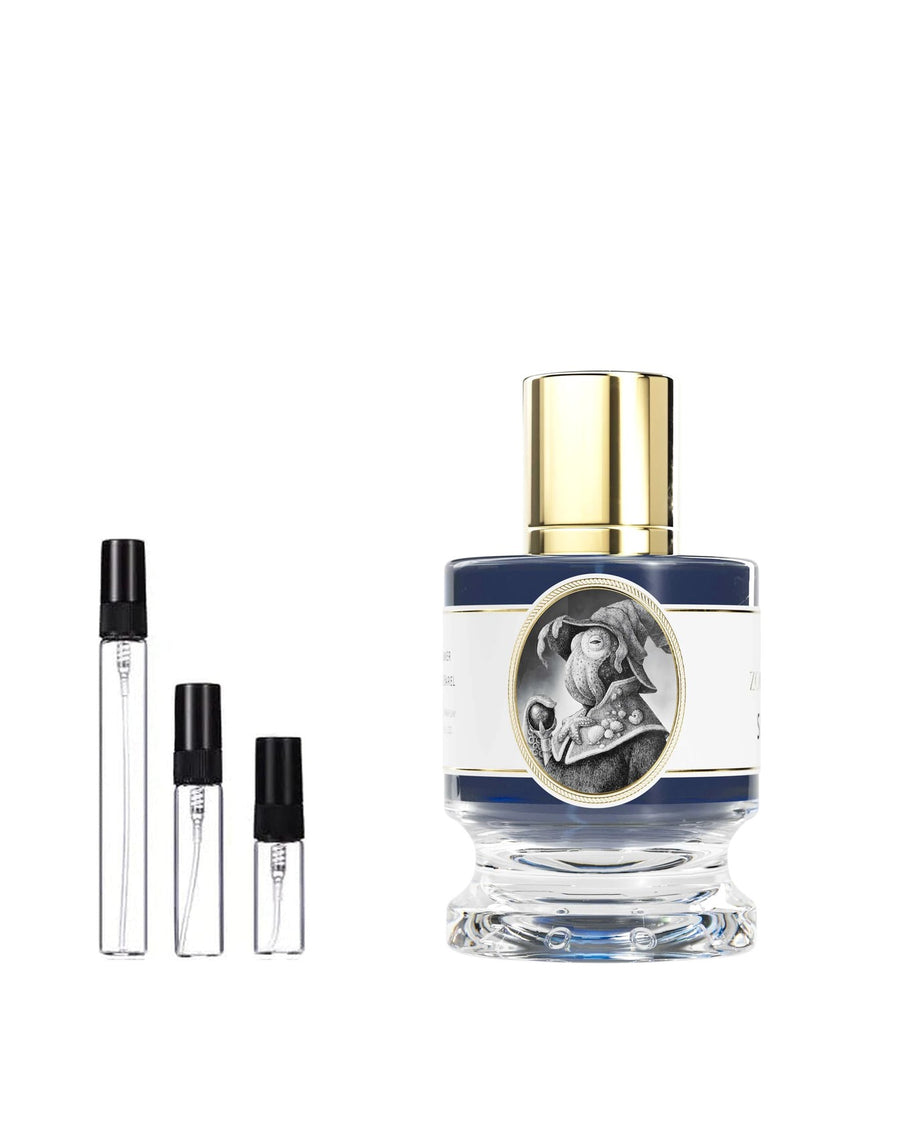
Why the same list reads differently
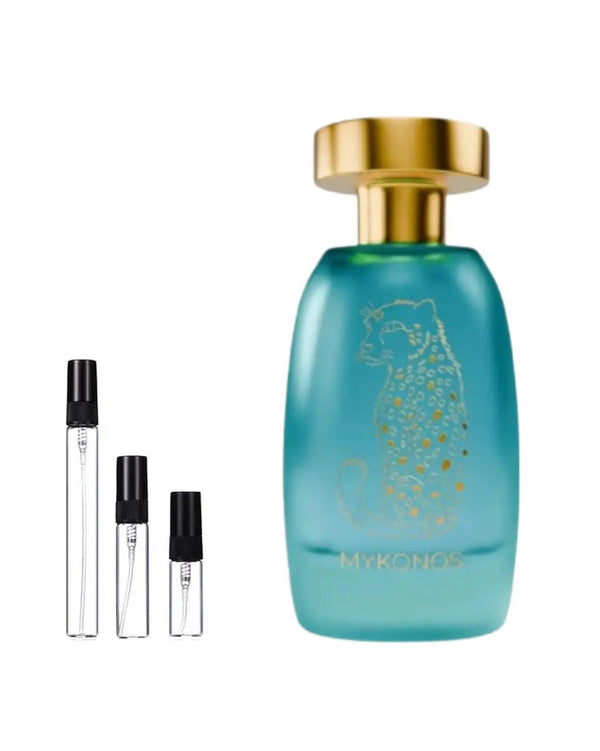
Skin, temperature and the clothes you wear change what you smell. Mykonos Senja lists coffee and almond on top, patchouli, chocolate and milk in the heart, and sandalwood, chocolate, vetiver and cistus at the base. Two wearers can find it creamy and cocoa-rich or dry and woody. The reasons are in why perfume smells different on skin.

Even a short list like Rayhaan Cedrus Blanc, with bergamot on top, musk in the heart, and cedar at the base, depends on your skin. Three notes can be a whisper or a statement.

What a sample adds
A sample gives you what a shop strip gives, and more: several days on your own skin, in your own weather, with your own routine. You find out whether the perfume is too strong, too sweet, too thin or exactly right, before the decision is expensive. If you dislike it, you have lost a small vial and learned something. If you love it, you can buy the bottle with confidence, or take a larger sample to be sure; which sample size to choose explains the options.
What a sample does not do
A sample is not a guarantee. It shows you a perfume over a few days, not over a year, and it cannot tell you how a bottle will feel when you have worn it twenty times. It does not remove all risk; it moves the risk from a bottle to a vial. It also cannot replace a conversation with your own taste: if you tend to dislike sweet perfumes, a sample will confirm that quickly, but it will not argue you out of it. Use it as evidence, not as a verdict, and let a second wearing confirm the first before you spend on a bottle.
How to use samples before a bottle
Choose two or three candidates, not ten. Wear each for a full day, then repeat the one you liked most on a second day in different conditions. How to compare two perfumes with samples gives the routine, and how to build a sample set shows how to plan a larger comparison. For the difference between a decant, a tester and a sample, see decant vs tester vs sample.
Each vial is filled and labelled by FragranceGems from the original bottle, and the houses are not involved. See how we fill your sample, the FAQ, find your scent and all samples.
FAQ
Is buying perfume blind ever a good idea?
It can work for a perfume you already know well, or a flanker of it. For a new perfume, the risk is high, because a note list says little about strength, development and how it sits on your skin.
Why does a sample save money?
Because the costly mistake is a full bottle you do not wear. A sample lets you find that out first, for a small share of the spend, and the money goes to the perfumes you actually reach for. We do not quote figures here, because they depend on the perfumes you choose.
Can I send a sample back if I do not like it?
No. Samples are decanted to order and cannot be taken back. If something arrives wrong or damaged, contact us at info@decantgems.eu and we will solve it. That is one more reason to choose carefully, using a guide such as this one.