

Which Essential Parfums sample to try first
Essential Parfums gives every eau de parfum its own perfumer, who signs the bottle. Eight samples in order of Parfumo ratings, and a map of the woods and vanillas.

Essential Parfums was started in Paris in 2018 by Géraldine Archambault after thirty years in the perfume industry. The manifesto reads that simplicity is the ultimate sophistication, and the rule is plain: a different perfumer for every eau de parfum, working freely and signing the bottle. The brand states a concentration of 16 to 18 per cent, 82 to 93 per cent ingredients of natural origin, alcohol made from beetroot and no added colour. The bottle is refillable with aluminium refills. The results are clear and uncluttered, which is why an Essential Parfums sample tells you quickly whether the style suits you.
Essential Parfums: eight samples, ordered by ratings
We ordered the samples on our list by the number of ratings each perfume has collected on Parfumo, as gathered by NicheGems. Rating counts show how widely a perfume is discussed, not how good it is. Where the house lists notes without levels, we give them as one list.
Bois Impérial (2020, Quentin Bisch) is built around Akigalawood: Thai basil and Timut pepper, Haitian vetiver, Georgywood, Petalia, Indonesian patchouli and Ambrofix.

Divine Vanille (2019, Olivier Pescheux) is a dark vanilla: Madagascan vanilla absolute, tonka bean, benzoin and cinnamon bark, with osmanthus, cedarwood, patchouli and musks.

Fig Infusion (2022, Nathalie Lorson) opens on fig, mandarin and clementine, moves through freesia, orange blossom and Sri Lankan black tea, and rests on Virginian cedarwood, sandalwood and benzoin.

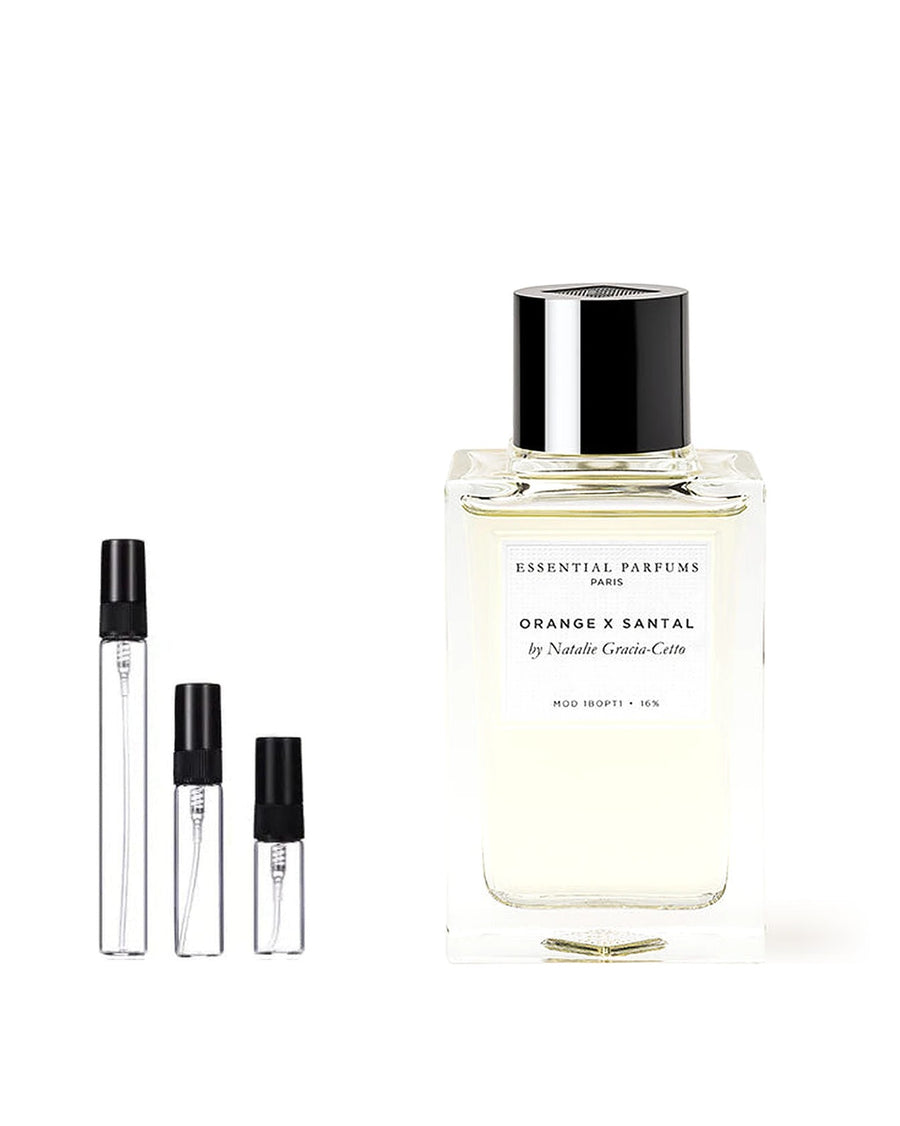
Orange X Santal (2018, Natalie Gracia-Cetto) pairs bitter orange and orange peel with Egyptian basil, oak moss, cypress and Australian sandalwood.
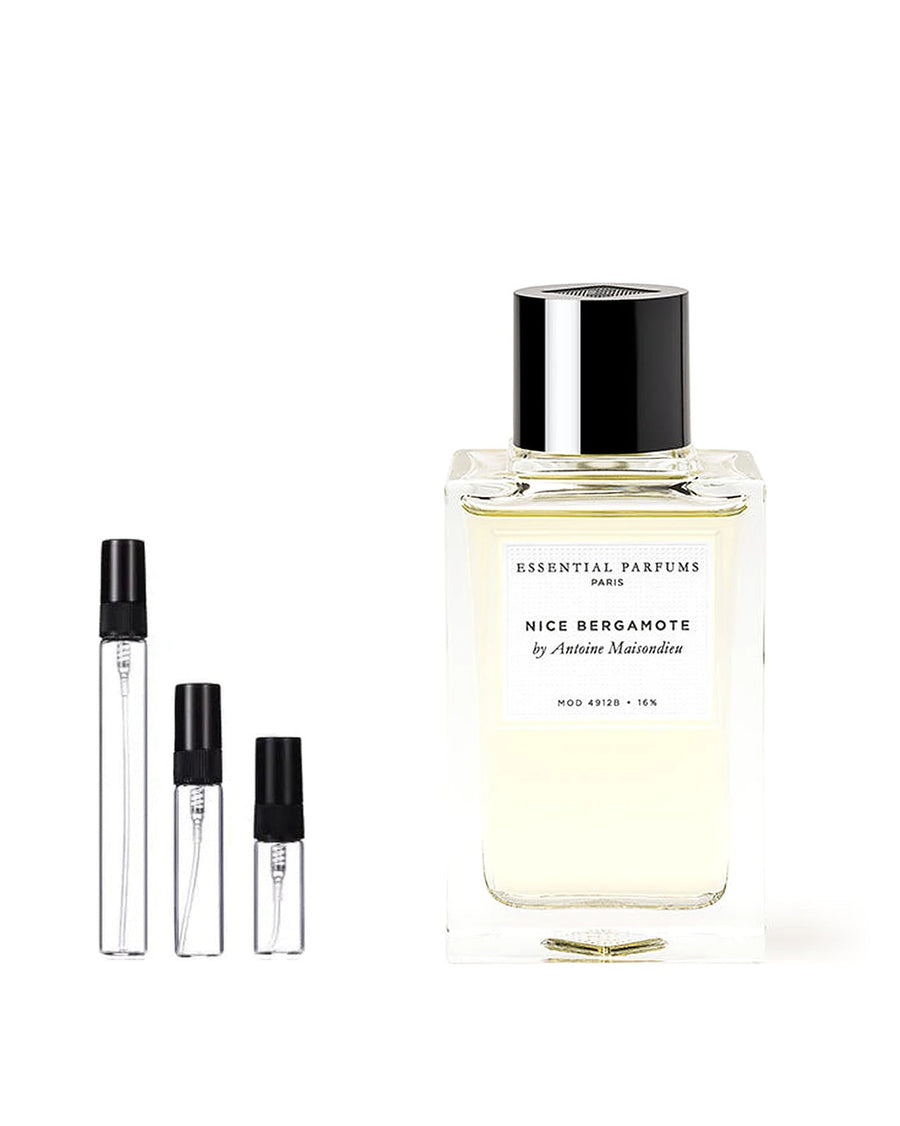
Nice Bergamote (2018, Antoine Maisondieu) puts Calabrian bergamot beside rose petals, jasmine and Comoros ylang ylang, over cedarwood and Venezuelan tonka bean.
The Musc (2018, Calice Becker) lists red ginger from Laos, lavandin, beeswax absolute, Nirvanolide musk and Australian sandalwood.

Rose Magnetic (2018, Sophie Labbé) cuts a rose with bitter grapefruit and peppermint, and adds Turkish rose absolute, lychee, cedarwood, musks and vanilla bean.

Patchouli Mania (2023, Fabrice Pellegrin) takes patchouli in a gourmand direction, with davana, green hazelnut and coriander seed, then cocoa, Clearwood and tea, over patchouli, vetiver and Cetalox.

Velvet Iris (2025, Dominique Ropion) reads iris as woody and carnal, from pink pepper, turmeric leaf and buchu leaf through galbanum, lentisque and iris concrete to sandalwood, labdanum and Saffiano. Ambre Latte (2026, Jordi Fernández) is the newest: almond milk, roasted tonka bean and dulce de leche caramel over vanilla, benzoin, white musks and pale woods.
The Essential Parfums note map
The woods run deepest here. Patchouli sits in Bois Impérial, Divine Vanille and Patchouli Mania, and vetiver in Bois Impérial and Patchouli Mania. Sandalwood links Fig Infusion, Orange X Santal and The Musc. Vanilla appears in Divine Vanille and Rose Magnetic, ginger in The Musc, and rose in Nice Bergamote and Rose Magnetic. The vanilla samples guide and the rose samples guide place those notes among other houses.
A first order of Bois Impérial, Divine Vanille and Fig Infusion covers wood, vanilla and fruit. Because the house names the perfumer on every label, you can also order by nose and pick the perfumers whose other work you already know. The lighter ones, Orange X Santal and Nice Bergamote, suit the office, and how to test perfume on skin gives a simple routine.
From Essential Parfums sample to bottle
If one holds up over several wearings, the bottle is the next step. Our vial is filled by FragranceGems from the original bottle and labelled by us; Essential Parfums is not involved and it is not a brand sample. The first perfume in full size is at Essential Parfums Bois Impérial. The sample set page shows how to combine vials, and the FAQ covers filling and labels.
FAQ
Which Essential Parfums sample should I try first?
Bois Impérial. It has the most Parfumo ratings of the ten on our list by a wide margin, and it shows the house’s approach clearly: Akigalawood and patchouli against Thai basil and Timut pepper.
Who creates the Essential Parfums perfumes?
A different perfumer for each one, working with complete creative freedom. The label says by and then the name, from Quentin Bisch for Bois Impérial to Dominique Ropion for Velvet Iris, so you can follow a nose you like.
What does the house say about its ingredients?
It states 82 to 93 per cent natural-origin ingredients, alcohol made from beetroot, no added colour and a concentration of 16 to 18 per cent. These are the brand’s own statements, taken from its product pages.
